
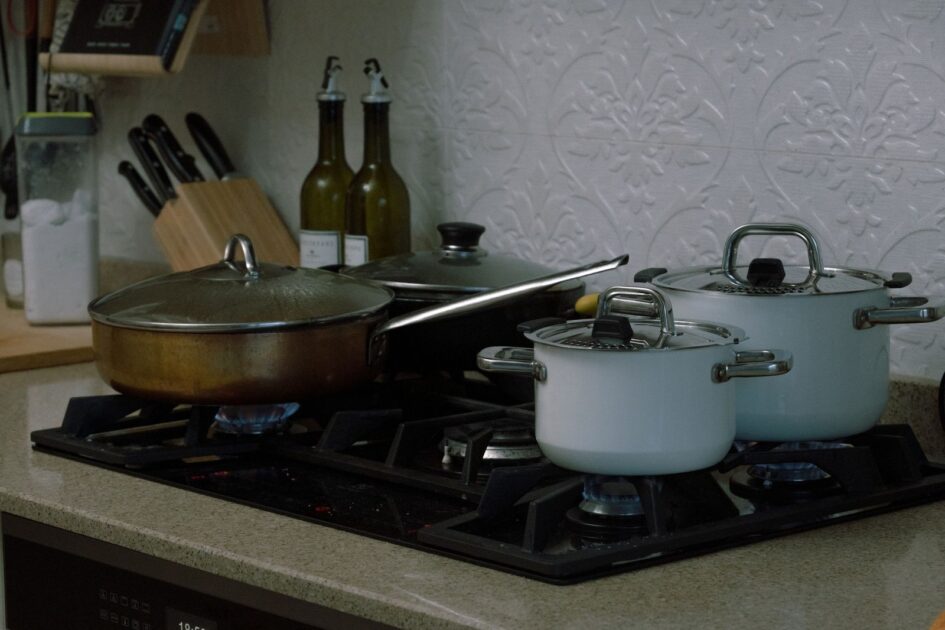
The “best” cookware in Singapore is usually a short set you will use every week, with a frying pan and at least one pot that works on an induction hob, rather than a long boxed set that stays in a cupboard. Compare what is in the set, the cooking surface, and how you will store it.
1. What “best cookware” actually means in a Singapore kitchen
In a Singapore flat, “best” usually means a frying pan for weeknight cooking, a saucepan, and a lidded pot for slower work. Many kitchens run on an induction hob and have limited cupboard and sink space. A set that looks complete in a photograph can still fail if the frying pan is the wrong size or the lids do not stack.
This Singapore cookware collection groups frying pans, saucepans, casseroles and woks, including stainless, tri-ply and aluminium non-stick lines. Use a collection like that as a map of piece types, then ask which pieces would earn a hook in your kitchen.
2. Sets versus buying pieces as you need them
A boxed set can be efficient if the diameters match your hob and the lids can be shared. It is a poor buy if you only needed a frying pan and a medium pot. Buying pieces as you need them costs more at the start, but it lets you pair a non-stick frying pan with a stainless casserole without taking extras.
Look at what is in the set: how many frying pans, whether a wok or saucepan is included, and whether the bases are induction-ready. A compact pan set can work in a small kitchen if the pieces do not duplicate one another.
3. The frying pan you will use most days
For many households, the frying pan decides whether the set feels worth it. A mid-size pan, often around 24 cm to 28 cm, covers most weeknight cooking.
Non-stick coatings make eggs and delicate foods easier, but they wear, dislike overheating and metal tools, and eventually need replacing. Stainless or tri-ply frying pans last longer and can take higher heat, but they need a slightly different technique so food does not stick.
This frying pan collection includes stainless and induction-ready pans, aluminium non-stick lines, a ceramic-coated option, and woks. Choose the surface for the food you cook most often, then check that the base sits flat.
4. Stainless steel pots, casseroles and tri-ply bases
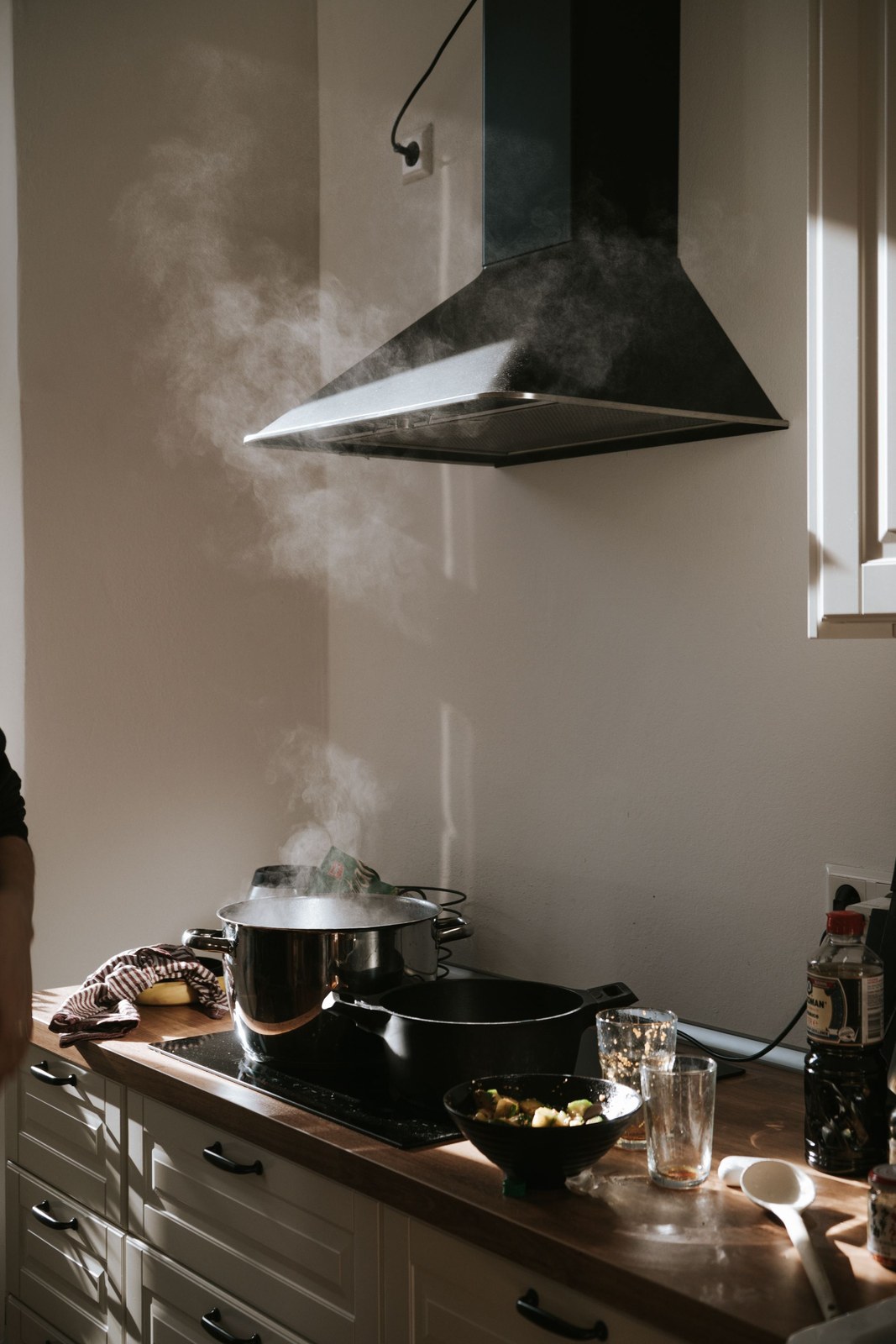
A stainless pot or casserole is usually the second workhorse: soups, boiling, and anything that needs a lid. Fully clad or tri-ply construction is meant to spread heat more evenly than a thin disc-base pot, which matters on induction.
18/10 stainless is a common food-contact grade for interiors. The useful check is still whether the piece sits stably, has a tight lid, and can go into the oven if the handle allows it.
This stainless steel cookware collection lists pans, pots and casseroles, including tri-ply and induction-ready lines. Compare a casserole and a saucepan as separate jobs. If a set gives you two similar pots and no frying pan you like, it is not complete for daily use.
5. Induction, oven and hob checks before you buy
Most newer Housing and Development Board kitchens, and many condominium kitchens, use induction. A pan sold in Singapore should say clearly whether it is induction-compatible, usually via a magnetic steel base or a fully clad body.
A magnet that clings to the base is a quick check, but pack wording and diameter still matter, because a small pan may not trigger a large zone.
The Singapore Food Agency is the national authority for food safety, including materials that come into contact with food. For cookware, buy from a known seller, keep pieces in good condition, and replace a flaking coating, rather than treat a “non-toxic” badge as the full safety story.
A Consumer Reports report, via WISN 12 News, on when to replace non-stick pans. It is not a Tramontina product video and is not a recommendation of any brand.
6. Well-known brands sold in Singapore, compared in plain terms
Several cookware brands are widely sold in Singapore, in department stores, specialist shops and their own sites. Tramontina, a Brazilian cookware maker with a Singapore site, lists cookware sets, frying pans and stainless collections, including tri-ply, induction-ready and non-stick lines. Tefal is a familiar everyday non-stick name in many kitchens.
Le Creuset is known for enamelled cast iron, often bought as a casserole rather than a full set. WMF is a German-origin brand sold in Singapore for stainless pieces. Scanpan is a Danish brand sold locally, often for coated pans. IKEA sells affordable stainless pots and pans in its Singapore stores, which many flat kitchens already use.
None of those names is “best” in every category. A cast-iron casserole, a coated frying pan and a tri-ply saucepan do different jobs, so compare the piece, the hob and the care you will give it.
Under the Consumer Protection (Fair Trading) Act 2003, buyers in Singapore have a general consumer-protection framework when advertising or sales conduct is misleading, so “best set” claims should be read as marketing until the contents of the box are clear.
How to choose a set you will actually use
Write down your hob type, the pieces you cook with most often, and how you will store them. Then choose a short set, or a frying pan plus one or two pots, that covers those jobs. Confirm induction compatibility, a lid that fits, and a surface you will look after.
Frequently asked questions
What does “best cookware” usually mean in a Singapore kitchen?
A short set you will use every week, with a frying pan and at least one induction-ready pot.
Is a large boxed set always better than buying pieces?
Not always. A set is a poor buy if you only needed a frying pan and a medium pot.
How can I check whether a pan works on induction?
The pack should say it is induction-compatible. A magnet that clings to the base is a quick check.
Should I treat a “best set” claim as the whole decision?
No. Compare the piece, the hob and the care you will give it, and treat “best set” claims as marketing.
Recent Comments